Many contractors in Edinburgh cut corners by skipping a proper slope stability analysis before excavation. That mistake often leads to costly slips, especially on the steep banks around the Water of Leith or the volcanic crags of Arthur's Seat. A reliable assessment starts with a geotechnical instrumentation plan to monitor pore pressures and ground movement. Without it, you risk underestimating the shear strength of the glacial tills that dominate the city's subsurface. Our team combines field data with limit equilibrium modeling to deliver a slope stability analysis that actually reflects Edinburgh's ground conditions, not some textbook default.
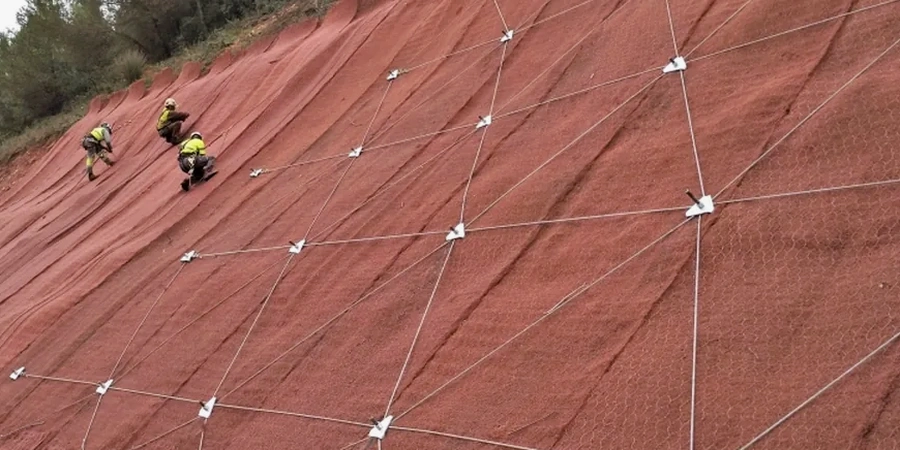
Edinburgh's glacial tills and high water tables demand site-specific slope stability analysis – one size never fits the city's varied ground.
Scope of work in Edinburgh
- Effective cohesion (c') and friction angle (φ')
- Unit weight and moisture content
- Pore pressure ratio (ru)
- Factor of safety under static and seismic conditions
Typical technical challenges in Edinburgh
A few years back, we saw a housing development near the Pentland Hills where the contractor excavated a 6 m cut without any slope stability analysis. After a week of heavy rain, the face collapsed into the working area. That slip cost three weeks of delay and a redesign of the retaining wall. Edinburgh's high water table and the presence of soft clay lenses in the till make this a recurring problem. A proper slope stability analysis would have flagged the low shear zone early and allowed for a simple drainage solution before the failure occurred.
Our services
We tailor each slope stability analysis to the specific geology of Edinburgh, offering two complementary works to match project scale and budget.
2D Limit Equilibrium Analysis
Using Bishop's simplified and Spencer's methods, we model critical slip surfaces in Edinburgh's tills and residual soils. Output includes factor of safety, failure geometry, and reinforcement recommendations. Ideal for single cuts or small housing plots.
3D Finite Element Assessment
For complex slopes near infrastructure or water bodies, we run 3D PLAXIS models that account for stress redistribution and progressive failure. Includes parametric study of drainage and seismic loading. Best for large developments or road cuts.
FAQ
How does Edinburgh's geology affect slope stability analysis?
Edinburgh sits on glacial till over bedrock, with lenses of soft clay and silt in some valleys. The till has variable density, and water tables are often high. Our analysis accounts for these heterogeneities using local borehole data and site-specific laboratory tests.
What is the typical cost of a slope stability analysis in Edinburgh?
For a standard residential cut slope, the analysis ranges between £1,130 and £3,680 depending on complexity, number of sections, and laboratory testing required. Contact us for a quote tailored to your project.
Do you consider seismic loads in Edinburgh's slope stability analysis?
Yes. Although Edinburgh has low seismicity, we apply a horizontal seismic coefficient of 0.08g to 0.12g per Eurocode 7. For critical slopes near transport corridors, we also run dynamic analysis using the acceleration response spectrum for UK ground type B.
What factor of safety do you recommend for permanent slopes?
For permanent slopes under static conditions, Eurocode 7 recommends a factor of safety of 1.5 or higher. For temporary cuts, we accept 1.3 with careful monitoring. We always include a sensitivity analysis to show how pore pressure changes affect the result.