Flexible pavement design in Edinburgh must follow BS 5930 and Eurocode 7 to handle the city's variable ground conditions. The local glacial till and raised beach deposits create a unique challenge for road and car park projects. We combine these standards with site-specific data to produce a durable, cost-effective pavement structure. Our team first assesses the subgrade California Bearing Ratio (CBR) through In-Situ and laboratory analysis. This step ensures the design thickness and material selection match the actual ground strength. For deeper understanding of the soil profile, we often couple this with a calicatas exploratorias to inspect strata changes across the site.
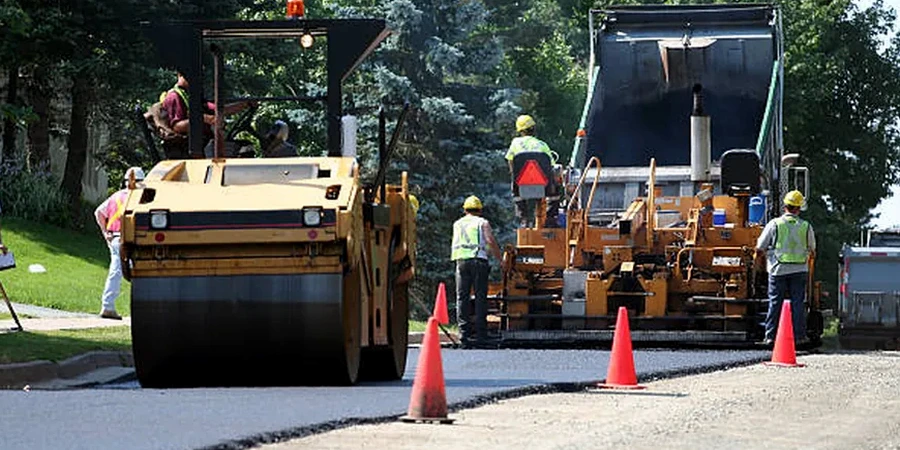
A flexible pavement that ignores local till variability can fail within three winters. Layer thickness must be tuned to actual CBR, not regional averages.
Scope of work in Edinburgh
- Subgrade CBR values, typically ranging from 2% in soft clays to 8% in competent till.
- Traffic loading categories per UK DMRB standards, from low‑volume access roads to bus routes.
- Drainage conditions and frost susceptibility, critical given Edinburgh's 980 mm annual rainfall and winter freeze‑thaw cycles.
- Layer moduli for asphalt and granular base, calibrated against local aggregate sources.
Working video
Typical technical challenges in Edinburgh
The glacial till beneath Edinburgh can hide pockets of soft clay and peat, especially in the former watercourses of the Water of Leith and Braid Burn. These lenses cause drastic CBR drops over short distances. If the pavement design assumes uniform bearing capacity, the result is cracking and rutting within two to three years. High groundwater levels, typical between 1.5 m and 3 m depth in many central districts, further weaken the subgrade if drainage is not addressed. The risk multiplies on slopes where lateral movement can shear the pavement edge. We mitigate this by mapping CBR variability across the entire footprint, not just at one test point.
Our services
We offer two focused works to de‑risk your flexible pavement design in Edinburgh from the ground up.
Subgrade Investigation & CBR Testing
In‑situ CBR tests using a dynamic cone penetrometer and laboratory soaked CBR on undisturbed samples. We also measure moisture content and density to confirm the design subgrade strength before you commit to layer thickness.
Pavement Structural Design & Layer Optimisation
Using DMRB CD 225 and analytical pavement models, we calculate the exact asphalt, base, and sub‑base thickness for your traffic load and subgrade class. We deliver a thickness design report and material specification ready for tender.
FAQ
Why does Edinburgh's glacial till make flexible pavement design different from other UK cities?
Glacial till in Edinburgh is highly variable — it can grade from dense, well‑graded gravelly clay to soft silty clay within metres. This causes CBR to fluctuate sharply across a single site. Standard regional CBR tables often overestimate strength, so we run site‑specific tests at multiple locations to avoid under‑design.
What is the typical CBR value for subgrade in Edinburgh?
CBR values range from 2% in soft estuarine clays near Leith to 8% in competent boulder clay on higher ground. Most central sites fall between 3% and 6%. We always confirm with in‑situ testing because the local geology can surprise you.
How much does a flexible pavement design study for a typical Edinburgh project cost?
A full study including subgrade investigation, CBR testing, and design report typically ranges between £1,320 and £3,550. The final cost depends on site size, number of test locations, and whether laboratory compaction tests are required.
Do I need a separate drainage design for the pavement layers?
Yes. Flexible pavement performance in Edinburgh's wet climate depends heavily on subsurface drainage. We include drainage recommendations (edge drains, permeable sub‑base, fall gradients) in our design report to prevent water accumulation that can reduce CBR by up to 50%.
Can you design a pavement for a bus route or heavy‑duty access road?
Absolutely. We follow DMRB CD 225 for traffic categories up to 10 million standard axles. For bus lanes and HGV routes we increase the asphalt thickness and may recommend a cement‑treated base to spread load without excessive rutting.