Foundation design in Edinburgh is a critical discipline that underpins the safety, stability, and longevity of any construction project across the city. This category encompasses the full spectrum of geotechnical and structural engineering works required to design, analyse, and specify foundation systems tailored to the unique demands of each site. From initial ground investigations and bearing capacity assessments to detailed settlement analysis and construction oversight, the scope covers shallow foundations, deep foundations, and specialised solutions. In a city where centuries-old infrastructure coexists with ambitious modern developments, getting the foundation right is not merely a technical requirement—it is a fundamental investment in the building's future performance and the safety of its occupants.
Edinburgh's geological landscape presents a fascinating and often challenging canvas for foundation engineering. Much of the historic city centre rests upon glacial till and sedimentary rocks of the Carboniferous period, including sandstones, siltstones, and mudstones, which can vary dramatically in strength and weathering depth over short distances. The city's iconic topography, shaped by volcanic activity, introduces basalt and dolerite intrusions—most famously the Castle Rock and Arthur's Seat—creating zones of extremely hard rock juxtaposed with softer, compressible strata. Furthermore, many areas are underlain by made ground, particularly in the Old Town and former industrial zones, where centuries of human activity have deposited variable fills that require careful characterisation before any foundation can be designed. Groundwater conditions and the potential for abandoned mine workings, especially in the eastern and southern fringes, add further layers of complexity that demand rigorous site-specific investigation.
All foundation design work in Edinburgh must comply with the UK's robust regulatory framework, anchored by the Building (Scotland) Regulations 2004 and their supporting technical handbooks. These mandate adherence to British Standards, notably BS EN 1997 (Eurocode 7) for geotechnical design, which requires a limit state approach to ensure both ultimate and serviceability criteria are satisfied. The NHBC Standards also apply to new residential constructions, setting prescriptive requirements for foundation depths and materials. Crucially, any foundation design must be undertaken by a suitably qualified engineer and should be informed by a thorough ground investigation compliant with BS 5930 and BS EN ISO 22475. Planning authorities in Edinburgh, through the local development plan, may impose additional conditions related to archaeology, tree preservation, or flood risk—factors that directly influence foundation choices and demand close collaboration between the design team and regulatory bodies.
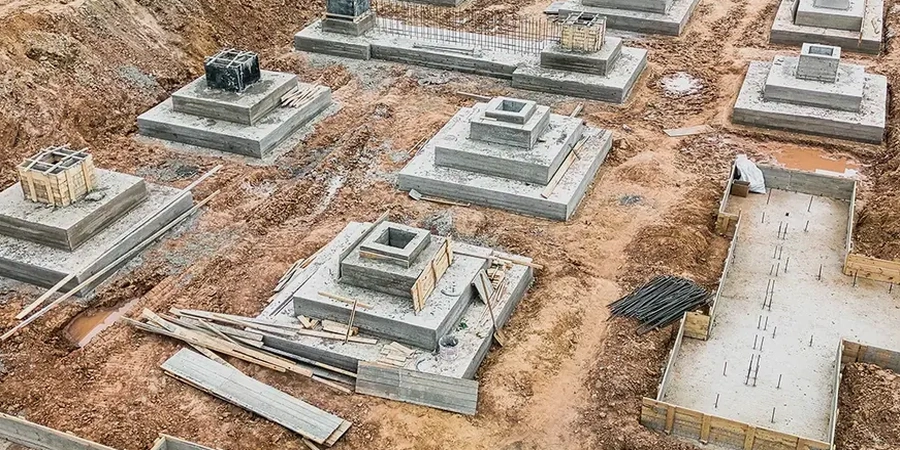
The types of projects requiring professional foundation design in Edinburgh are remarkably diverse. Residential extensions and new builds across neighbourhoods like Morningside or Stockbridge often rely on traditional strip or trench fill foundations, but increasingly require engineered solutions when dealing with sloping sites or clay-rich soils prone to shrinkage. Larger commercial and mixed-use developments, such as those transforming the Edinburgh Park and Leith waterfront areas, frequently demand more sophisticated approaches. For structures where ground conditions are particularly poor or loads are exceptionally high, a raft/mat foundation design may deliver the optimal solution, spreading structural loads across a broad concrete slab to mitigate differential settlement. Historic building underpinning and basement excavations in the UNESCO World Heritage site demand an extraordinary level of care, blending modern engineering with conservation principles. Infrastructure projects, from the tram network extensions to energy facilities, rely on deep foundations like piles and caissons to transfer loads to competent strata beneath weak surface deposits.
Available services
Quick answers
What are the main factors that determine the type of foundation needed for a project in Edinburgh?
The primary factors are the ground conditions revealed by a site investigation—including soil type, strength, and groundwater level—together with the structural loads from the building. Edinburgh's varied geology, from hard volcanic rock to soft glacial till and made ground, means a solution like a raft/mat foundation might be needed on weaker soils, while dense rock may suit simple pad foundations. Local factors such as nearby trees, mine workings, and slope stability also heavily influence the final design choice.
How does Edinburgh's geology affect foundation design compared to other UK cities?
Edinburgh's geology is particularly varied due to its volcanic and glacial history, creating abrupt transitions between extremely strong igneous rock and softer sedimentary deposits or compressible fills. Unlike cities on uniform clay basins, a single site here can straddle multiple ground conditions. This demands more detailed ground investigations and often leads to hybrid foundation solutions, as the design must account for potential differential settlement across these contrasting materials.
What building regulations must foundation designs comply with in Scotland?
Foundation designs must comply with the Building (Scotland) Regulations 2004, which reference Eurocode 7 (BS EN 1997) for geotechnical design using a limit state approach. The technical handbooks deliver specific guidance on foundation depths, materials, and ground treatment. For new homes, NHBC Standards are also mandatory. All designs must be based on a ground investigation carried out to BS 5930, and the designer must be demonstrably competent in geotechnical engineering.
When is a deep foundation like piling necessary instead of a shallow foundation?
Deep foundations become necessary when shallow bearing strata are too weak, highly compressible, or variable to safely support structural loads without excessive settlement. In Edinburgh, this often occurs on deep made ground, soft alluvial deposits near watercourses, or where mining subsidence is a risk. Piling transfers loads to a competent bearing layer at depth, bypassing problematic near-surface soils that even a reinforced raft/mat foundation cannot adequately address.