Edinburgh's geology is a mosaic of glacial tills, raised marine deposits, and river terrace gravels from the Water of Leith. This variability means that a single borehole can miss critical changes in soil stiffness and horizontal stress. The Flat Dilatometer Test (DMT) is designed precisely for these conditions. It measures the lateral stress history and modulus of deformation in situ, giving us reliable data for foundation design on sites like the Meadows or Leith Docks. We typically complement DMT readings with an ensayo SPT to cross-check penetration resistance and a presurometro when we need a direct measure of modulus for deep excavations. The combination is powerful for Edinburgh's complex ground.
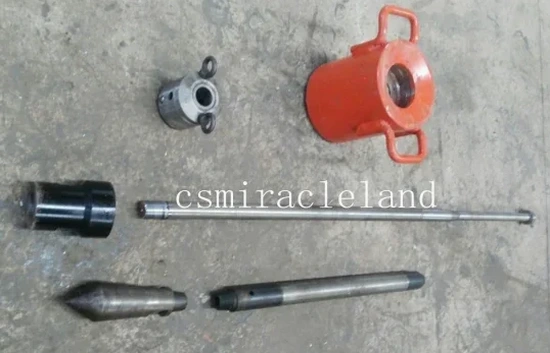
The DMT reveals the hidden stress history of glacial soils, giving engineers the confidence to design shallow foundations where others default to piles.
Scope of work in Edinburgh
Working video
Typical technical challenges in Edinburgh
We worked on a site near Bruntsfield Links where the contractor assumed stiff till from 3 m depth. The DMT profile showed a 2 m thick layer of soft clayey silt at 4.5 m with a KD of 1.8, indicating near-normally consolidated conditions. That layer would have caused differential settlement of over 40 mm under a six-storey building. The design was changed to a raft foundation with Improvement. Skipping the DMT would have meant accepting a structural risk that could take years to appear. In Edinburgh's variable glacial terrain, the DMT is not an extra cost, it is an insurance policy against hidden soft layers.
Our services
Our DMT service in Edinburgh covers the full workflow, from field testing to interpreted reports ready for structural engineers.
DMT Profile Testing
Continuous or discrete readings at 0.2 m intervals from ground surface to depths of 40 m. Suitable for all soil types encountered in Edinburgh, from soft estuarine clays to dense glacial till.
Seismic DMT (SDMT)
Combines the standard DMT blade with a seismic module to measure shear wave velocity (Vs). Provides small-strain stiffness (G0) for dynamic analyses and soil classification per NEHRP.
Consolidation & Settlement Parameters
Derivation of constrained modulus (M), coefficient of consolidation (ch), and preconsolidation pressure from DMT data. Critical for designing foundations on Edinburgh's compressible deposits.
Interpreted Geotechnical Report
A full report with profile plots, parameter tables, and design recommendations compliant with Eurocode 7. Includes comparisons with SPT and laboratory data for cross-validation.
FAQ
How does the DMT differ from the SPT in Edinburgh soils?
The SPT measures resistance to hammer blows, giving a crude strength index. The DMT measures actual lateral stress and stiffness at rest. In Edinburgh's glacial tills, the DMT provides a continuous profile of modulus and stress history, while the SPT gives a point measurement that can miss thin soft layers. We use both together: SPT for borehole correlation and DMT for detailed stiffness profiling.
Can the DMT be performed in Edinburgh's dense glacial till?
Yes, but it requires a powerful CPT rig or a dedicated push unit. The DMT blade needs a steady penetration rate of 20 mm/s, which is achievable in most tills around the city. In extremely dense or gravelly zones, pre-drilling may be needed. We assess the soil profile from trial pits or boreholes first to confirm feasibility.
What is the typical cost range for a DMT investigation in Edinburgh?
For a standard project with 5 to 10 test points to 20 m depth, the cost typically falls between £710 and £780. This includes mobilisation, field testing, data processing, and a full interpreted report. Larger volumes or deeper profiles reduce the per-metre rate.
How does the DMT data feed into foundation design under Eurocode 7?
The DMT provides direct inputs for settlement calculations (constraint modulus M), bearing capacity (undrained shear strength Su in clays, friction angle in sands), and lateral earth pressures (K0). These parameters are used in Design Approaches 1 and 2 of Eurocode 7. The report includes partial factors and characteristic values ready for the structural engineer.