The geotechnical contrast between Edinburgh's Old Town, founded on the volcanic Castle Rock, and the New Town's deep glacial till deposits over soft clays is stark. When designing anchored retaining walls for basement excavations in the city centre or slope stabilisation along the Water of Leith, the difference in mobilised bond stress between these two soil profiles is critical. A thorough active and passive anchor design must account for the variable shear strengths encountered across Edinburgh, from the stiff boulder clays of the Corstorphine area to the laminated silts underlying Leith. Without a precise understanding of the ground profile, anchor bond lengths derived from local track record can be misleading, which is why we always integrate a georadar survey to map subsurface anomalies before finalising the anchor layout.
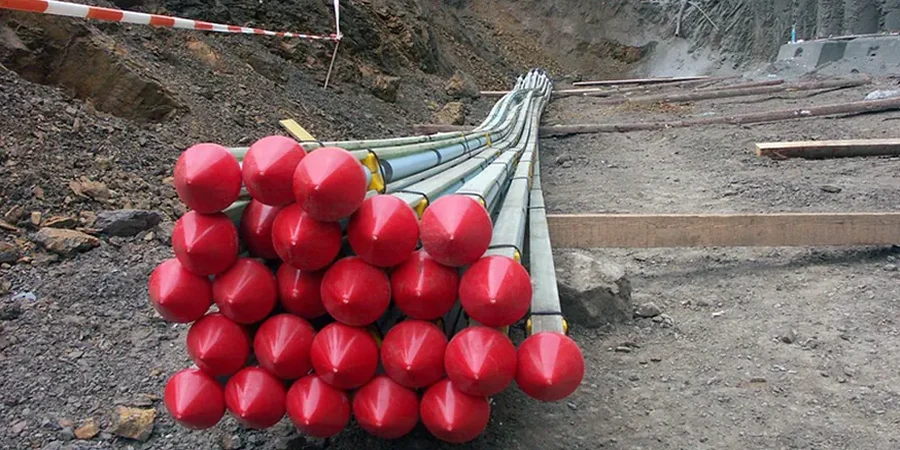
In Edinburgh's glacial till, anchor bond stresses can vary by a factor of three within 50 metres horizontally; a generic design is a risk no professional should take.
Scope of work in Edinburgh
Typical technical challenges in Edinburgh
A common mistake among contractors working in Edinburgh's New Town is assuming that the stiff glacial till encountered at shallow depth continues uniformly across the site. In reality, the till is often interbedded with soft clay lenses and water-bearing sand channels, particularly near the former Nor Loch basin. If the anchor design does not account for these weaker zones, the bond length may be insufficient, leading to creep failure under sustained load. We have seen cases where a passive anchor system designed for 400 kN working load slipped by 12 mm within six months because the grout column intersected a silt seam that was not sampled during the initial investigation.
Our services
Our approach to anchor design in Edinburgh integrates site-specific investigation with advanced numerical modelling, covering the full spectrum from temporary tie-backs to permanent prestressed systems.
Active Anchor Design for Basement Excavations
Calculation of prestress levels, bond length, and lock-off load for temporary and permanent anchors in Edinburgh's glacial till and soft clay deposits, including proof load testing supervision.
Passive Anchor Design for Slope Stabilisation
Untensioned anchor systems for long-term retention along the Water of Leith and the Braid Hills, with corrosion protection class selection per BS 8081 and creep analysis for the local soil conditions.
Anchor Verification & Testing Programme
On-site suitability tests, acceptance tests, and creep tests to validate the design assumptions, supported by instrumentation monitoring of load loss over time in Edinburgh's urban environment.
Visual overview
FAQ
What is the difference between an active and a passive anchor in geotechnical design?
An active anchor is prestressed to a predetermined load after installation, applying a compressive force to the ground and actively restraining movement. A passive anchor is not prestressed; it only resists load when the ground begins to move, acting like a reinforcing element. In Edinburgh's variable soils, active anchors are preferred for basement excavations where immediate restraint is needed, while passive anchors suit permanent slope stabilisation where some deformation can be tolerated.
What is the typical cost range for active and passive anchor design in Edinburgh?
For a standard anchor design including bond length calculations, load testing specification, and reporting, the cost typically falls between £750 and £2.930, depending on the number of anchor types, the complexity of the ground model, and whether numerical analysis (e.g. PLAXIS or FLAC) is required. This excludes the cost of on-site proof load testing, which is quoted separately based on mobilisation and test duration.
Which ground conditions in Edinburgh most affect anchor bond stress?
The most critical factor is the presence of soft clay or silt lenses within the dominant glacial till, especially near the former Nor Loch area and along the coastal plain of Leith. Bond stress in the till can reach 300 kPa, but drops to below 80 kPa in the laminated silts. A common oversight is not extending boreholes deep enough to intersect the full anchor bond zone; we recommend a minimum depth of 1.5 times the proposed anchor length to capture any weak layers.
How does Eurocode 7 influence anchor design in Edinburgh?
Eurocode 7 (BS EN 1997-1:2004) requires the use of partial factors on both actions (loads) and ground resistance. For anchor design, this means the characteristic bond stress derived from site investigation must be divided by a partial factor (typically 1.4 for permanent anchors) to obtain the design bond stress. The UK National Annex also imposes additional requirements for the verification of pull-out resistance and the selection of corrosion protection class based on the anchor's service life. We apply these factors rigorously to ensure compliance with local building control.